What should you do if you are sick or injured in Japan? Emergency numbers 119/110, hospitals, pharmacies, costs, insurance, translation, practical tips and useful phrases.
Falling ill abroad is far from a rare scenario: heatstroke in summer, food poisoning, a sprained ankle while temple-hopping in Kyoto, a sore throat in winter, an unexpected allergic reaction… And in Japan, even though the country is extremely safe and well organised, stress can build quickly: the language barrier, a different medical system, questions about insurance, the fear of "getting it wrong".
The good news: in the vast majority of cases, there are simple solutions, and very effective ones — as long as you know what to do, in what order, and which numbers to call. This DrivinJapan guide explains everything, from a minor stomach bug to a medical emergency, with practical checklists, useful phrases and advice tailored to travellers (solo, families, road trips, rural areas).
The key points in 20 seconds
- Medical emergency / ambulance: 119
- Police (accident, assault, danger): 110
- Need a hospital/clinic with foreign-language support: use the official guides (JNTO / Navii)
Tokyo also offers a multilingual medical hotline (information & guidance).
- Keep your passport + insurance + list of medicines on your phone
- Don't play down a knock or an accident: see a doctor if the pain persists
- On a road trip: locate 1 hospital "near your route" in advance
1) Before you even leave: the preparation that spares you 80% of the hassle
Japan has an excellent healthcare system, but a traveller's number one enemy is improvisation. A little preparation (15 minutes) is often enough to turn a stressful situation into a mere setback.
The "smart traveller" health checklist
- Travel insurance: check the medical cover limit, excesses, 24/7 assistance, and whether costs are paid upfront for you.
- Documents: photo of your passport + insurance card + emergency contacts + allergies (in your own language and in English).
- Medicines: bring your essentials + prescription (if you are on treatment). Note down the INN (generic name).
- Allergies / medical conditions: a "Medical ID" note on iPhone/Android can save you in an emergency.
- Location: save your hotel's address in Japanese (useful if you call an ambulance).
If you are travelling in summer (June → September), add a heatstroke prevention plan: hydration, electrolytes, breaks in air-conditioned places, and keep an eye on children/older people. In winter, watch out for the "dry air + heating" combination, which often triggers colds and irritation.
"Anti-panic" tip: prepare 3 phrases in Japanese
1) Kyūkyūsha o onegaishimasu. (救急車をお願いします。) = "I need an ambulance."
2) Nettai (or: Netsu) ga arimasu. (熱があります。) = "I have a fever."
3) Kega shimashita. (怪我しました。) = "I've been injured."
2) Quickly working out the "right level" of response
Your first decision: is this a problem that can be handled "simply" (pharmacy/clinic), or is it an emergency (ambulance/hospital)? In Japan, the approach is pragmatic: nobody will judge you for calling to ask for help, but it is better to call the right service.
Mini triage (simple and effective)
Pharmacy / clinic if:
- cold, sore throat, mild fever
- moderate stomach pain
- small cut, blisters, mild sprain
- mild allergy, itching
Emergency / ambulance if:
- chest pain, difficulty breathing
- loss of consciousness, confusion
- bad fall / car accident
- heavy bleeding, severe allergic reaction
In an emergency, call an ambulance on 119.
3) Vital numbers in Japan (save them right now)
Japan uses separate numbers depending on the type of emergency:
- 119: ambulance / fire brigade (medical emergency or fire).
- 110: police (road accident, theft, assault, danger).
- 118: coastguard (incident at sea).
If you are in Tokyo and need medical guidance (where to go, who speaks your language, etc.), there is a metropolitan medical information service with set opening hours.
What to say on the phone (119 / 110)
Operators can sometimes switch to English depending on the area, but assume you need to be clear and simple and give: what, where, who, phone number.
• Byōki desu / Kega desu. (病気です / 怪我です) = "Illness / injury."
• Basho wa ... desu. (場所は…です) = "The location is …" (hotel, station, junction).
• Watashi no namae wa ... desu. (私の名前は…です) = "My name is …"
• Denwa bangō wa ... desu. (電話番号は…です) = "My number is …"
For road accidents, the official guides recommend calling the police (110) and noting down the key information (place, time, contact details, number plate), then seeing a doctor even if the pain seems "minor" at the time.
4) I'm sick: pharmacy, clinic or hospital?
In many situations (cold, stomach pain, mild fever), you don't need a hospital. The simplest option: a pharmacy (kusuriya) or a clinic (naika = general medicine).
Option A — Pharmacy: quick and effective, but…
Japanese pharmacies are very convenient, and there are also "drugstores" everywhere. The challenge: explaining your symptoms. Show a note on your phone (in simple English) and use keywords:
• Fever / Netsu (熱) • Cough / Seki (咳) • Sore throat / Nodo (喉)
• Diarrhea / Geri (下痢) • Nausea / Hakike (吐き気) • Headache / Zutsū (頭痛)
If you have serious doubts (persistent high fever, intense pain, dehydration, blood, etc.), go to a clinic/hospital.
Option B — Clinic: ideal for most problems
Japanese clinics are often specialised (ENT, internal medicine, dermatology, orthopaedics). They can be very efficient, but some mainly work by appointment. In tourist areas, it is easier to find practices used to dealing with visitors.
Option C — Hospital: when it's serious (or when you're not sure)
If you need a facility that handles emergencies, or imaging (X-ray, CT scan), a hospital is the logical choice. To find facilities with multilingual support, tourist offices and official resources recommend dedicated platforms (JNTO, medical information network, etc.).
5) Injury, accident, fall: the reflex that protects you
Japan is very strict about accident procedures (especially if a vehicle is involved). Even if you feel "OK", the right reflex is: make the scene safe → alert → document → see a doctor.
Road accident (even a minor one)
- Call the police: 110.
- Note down: place, time, names, phone numbers, number plate, insurance, photos.
- See a doctor if there is pain/impact: some complications appear later.
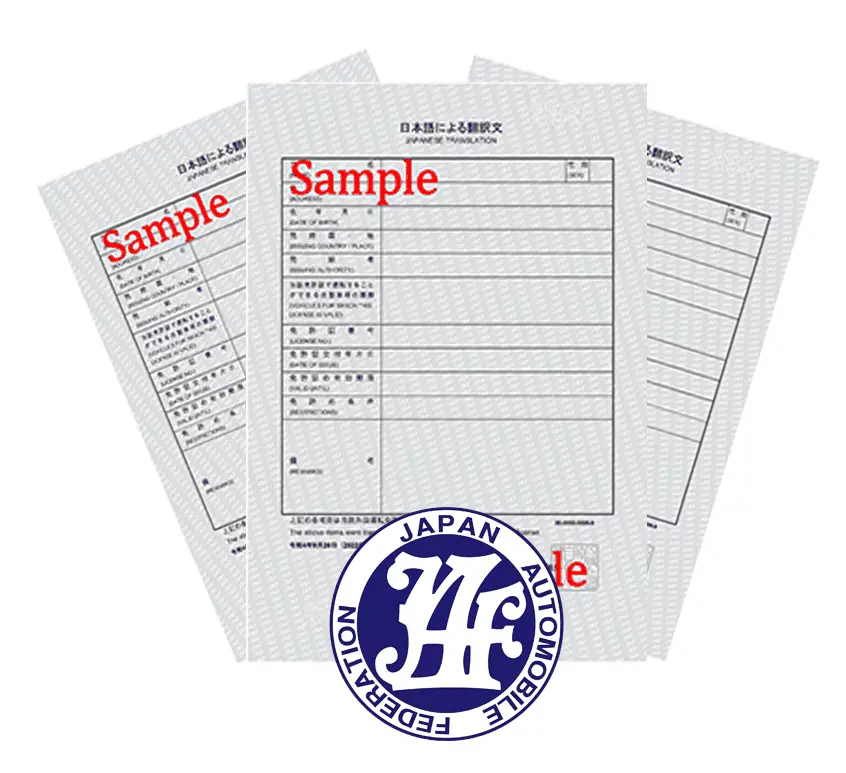
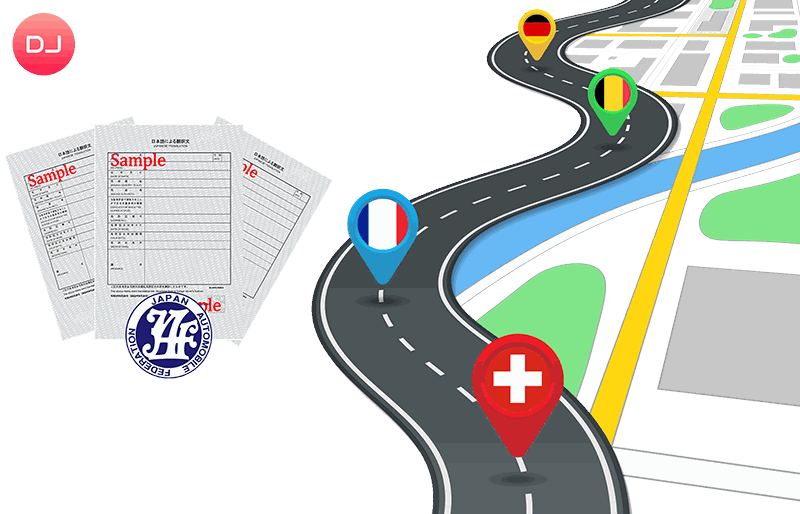
And if you are on a road trip: make sure your documents are in order. To rent a car and drive legally, many travellers (FR/BE/CH/DE/MC/SI…) must present their original licence + the recognised official translation.
Planning a road trip? Don't let an "administrative detail" spoil your trip
DrivinJapan helps you obtain your official translation (compliant with Japanese requirements) so you can set off with peace of mind. (And once you arrive in Japan: a reliable eSIM saves you the "out of data" hassle when you need to call or look for a hospital.)
6) How to find a "foreigner-friendly" doctor/hospital (without wasting 2 hours)
Two difficulties come up all the time: (1) finding a facility that accepts "walk-in" patients, (2) finding one where communication is possible. The official tourism websites recommend using search tools for medical facilities and information services, particularly for multilingual support.
The case of Tokyo: medical information service
In Tokyo, a metropolitan medical information service refers you to facilities that can provide treatment in foreign languages (set opening hours).
Outside Tokyo: local tourist offices & practical guides
Many Japanese destinations publish "Emergency / Medical" pages with numbers and advice (police 110, ambulance 119, etc.). In rural areas, your hotel/ryokan is often your best ally: the staff know which hospital accepts visitors and can call for you.
7) Money, payment, insurance: what surprises travellers
The main shock: in some cases, you may be asked to pay on the spot and then claim the money back from your insurer. That is why preparation (insurance policy + assistance number + cover limit) is essential. The official guides clearly encourage you to take out travel insurance for peace of mind.
- Keep a working means of payment (card + backup).
- Ask for an itemised invoice / medical certificate if you need to claim a refund.
- If you are hospitalised: contact your insurer's assistance service as soon as possible.
8) Common situations in Japan (and what to do in practice)
A) Food poisoning / stomach bug
Stay hydrated (small sips), take electrolytes if possible, and watch for warning signs: high fever, blood, intense pain, confusion, dehydration. If it gets worse: clinic or emergency services.
B) Heatstroke (summer)
In Okinawa, Tokyo or Osaka in summer, heatstroke can strike quickly. Take a break somewhere air-conditioned, drink water + salts, wear light clothing. If you feel faint, vomit or become confused: emergency.
C) Sprain / fall
Ice, compression, elevation — but if the pain is severe or you can't put weight on it: see a doctor, sometimes an X-ray is needed.
D) Allergy
Mild reaction: pharmacy. Severe reaction (swelling, difficulty breathing): emergency.
9) A short "useful phrases" guide (to show to staff)
• Eigo wa hanasemasu ka? (英語は話せますか?) = "Do you speak English?"
• Kono kusuri ni arerugī ga arimasu. (この薬にアレルギーがあります。) = "I'm allergic to this medicine."
• Hoken no shōmei ga arimasu. (保険の証明があります。) = "I have proof of insurance."
• Itami ga tsuyoi desu. (痛みが強いです。) = "I'm in a lot of pain."
10) The one piece of advice that changes everything: don't stay on your own
When you are ill, you tend to withdraw. Yet in Japan, asking for help is often the simplest route: your hotel, café staff, a kōban (neighbourhood police box), the tourist office… Many problems are solved faster when someone calls for you, gives the exact address, or goes with you.
Travelling with peace of mind means travelling prepared
Japan is one of the safest and best-organised countries in the world, and this also shows in the way emergencies are handled: 119 for an ambulance, 110 for the police, and plenty of official resources to guide tourists.
With a simple checklist (insurance, documents, useful phrases), you turn an illness or injury into a manageable situation and protect your trip. And if you are hitting the road (Hokkaido, Okinawa, Kyushu…), remember the fundamentals too: compliant driving documents + reliable connectivity — because, truth be told, peace of mind starts before you leave.