Discover the driving rules to know before hitting the road in Japan: which licence documents your nationality requires, driving on the left, speed limits, stop signs and railway crossings, zero alcohol, tolls and the ETC card, parking, fuel, winter driving, police checks and what to do in an emergency.
Important Rules to Drive in Japan: What Foreign Drivers Need to Know
Renting a car is the best way to see the Japan that trains don't reach: the coast roads of Noto, the mountain passes of Nagano, the quiet villages of Kyushu. The roads are excellent, the drivers courteous and the signage mostly readable. But a handful of rules differ from what you know at home, and the fines for ignoring them are steep. Here is everything we tell our 15,000 customers before they pick up the keys.

The essentials in 30 seconds. Drive on the left. Check which documents your nationality needs before booking: an International Driving Permit for some countries, an official JAF translation for others. Speed limits are low and enforced. Come to a complete stop at every stop sign and every railway crossing. Zero alcohol. Phone in a holder, never in your hand. Take an ETC card for the tolls. Return the car with a full tank. The rest of this article explains each point and what happens if you get it wrong.
1. Before you drive: which documents you need
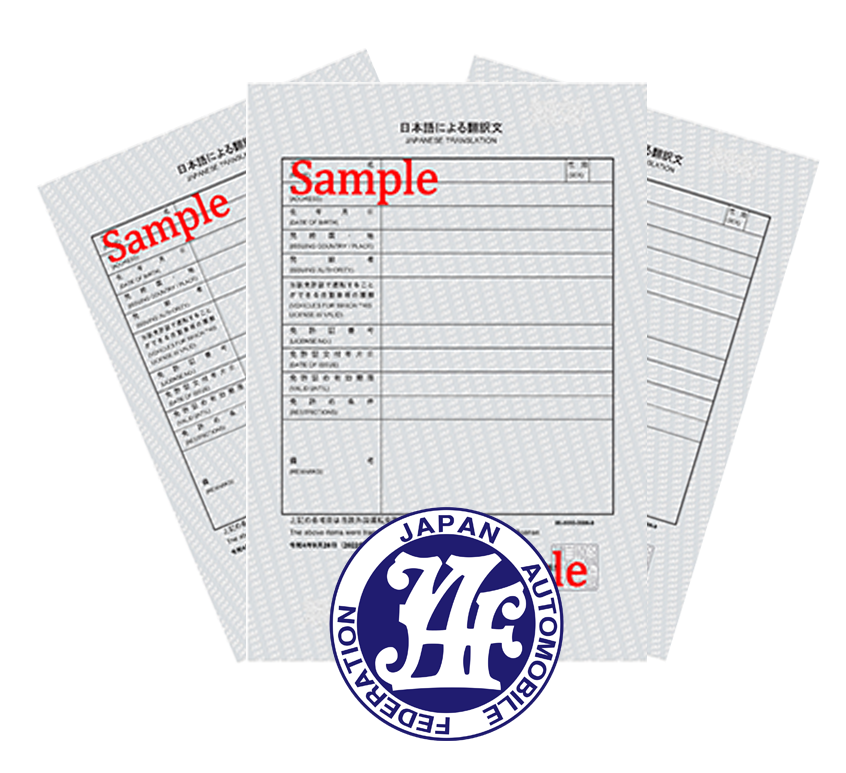
Short answer: it depends on the country that issued your licence, not on where you live. Japan only recognises the International Driving Permit issued under the 1949 Geneva Convention. Countries that issue the 1968 Vienna format, or none at all, are treated differently: their drivers need an official Japanese translation of their licence, issued by the JAF, the Japan Automobile Federation.
This is the question we read most often on travel forums, almost always in the same disbelieving tone: "I have an International Driving Permit, surely that's enough?" For a British, American, Australian or Dutch driver, yes. For a French, German, Belgian or Swiss driver, no, and the rental company will refuse the car.
| Licence issued in | International Driving Permit | What you must show at the counter |
|---|---|---|
| France, Germany, Belgium, Switzerland, Monaco, Slovenia, Taiwan | Not recognised (Vienna 1968 format, or no IDP agreement) | Original licence + passport + official JAF translation on paper |
| United Kingdom, Ireland, Netherlands, Spain, Italy, Portugal, Austria, Luxembourg | Recognised (Geneva 1949 format) | Original licence + passport + IDP |
| United States, Canada, Australia, New Zealand, Singapore, Hong Kong | Recognised (Geneva 1949 format) | Original licence + passport + IDP |
| Brazil, China, Vietnam, most of Africa and the Middle East | Not recognised | Tourists cannot drive; a Japanese licence is required |
The JAF translation: what it is and how to get it
The translation is a single A4 sheet in Japanese reproducing the details of your licence in a format set by the National Police Agency. Every rental company and every police officer in the country knows it. A translation by a sworn translator at home, by a Japanese friend or by an online service that is not JAF-approved has no value, however accurate it is.
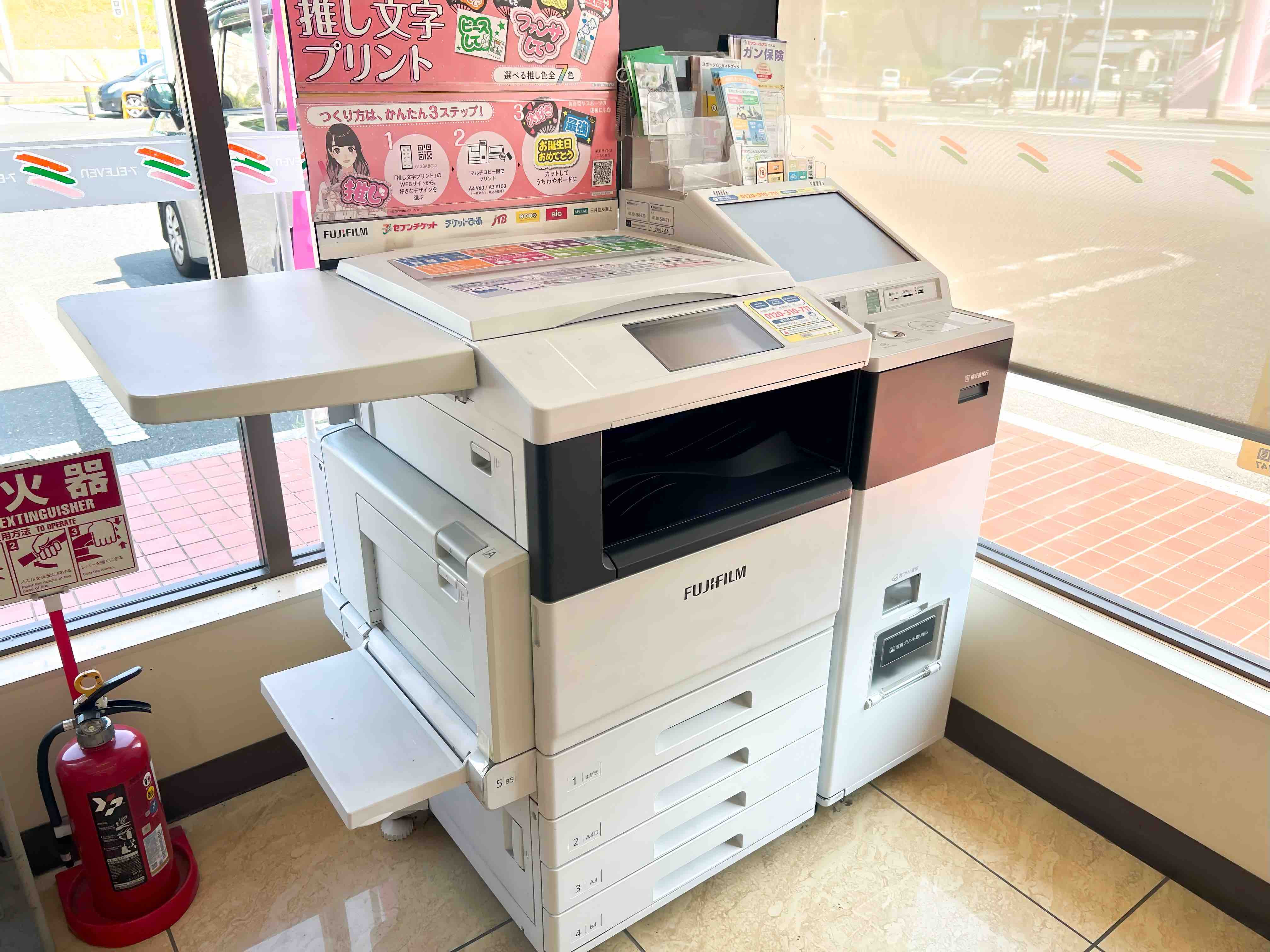
Since 2022 the JAF only accepts applications online, and only from an internet connection in Japan; VPNs are blocked. The fee is 6,000 yen, processing takes two to three working days, and the document is printed once at a convenience store. If you want the translation in your hands before you fly, DrivinJapan, based in Osaka, files the official application on your behalf and delivers the same JAF document, checked by our team, for €59.90 per licence. Order it as soon as your travel dates are fixed: validity runs from your entry date into Japan, not from the issue date, so ordering early costs you nothing.
Paper only. Whether it is an IDP or a JAF translation, the rental company wants the physical document. A PDF or a photo on your phone is refused at the counter and has no value at a police check. If you print your translation at a 7-Eleven on arrival, do it before you go to the rental desk; see our guide to printing your JAF translation at 7-Eleven.
Motorcycles and scooters
Your IDP or translation covers every category on your licence, so a full A licence lets you rent a motorcycle on the same terms as a car. One exception matters for French drivers: the French category B allows 125 cc riding in France after training, but in Japan this requires a certificate in both French and Japanese, requested from the consular section of the French Embassy in Tokyo. Without it, the B category only covers scooters up to 50 cc.
2. Driving on the left
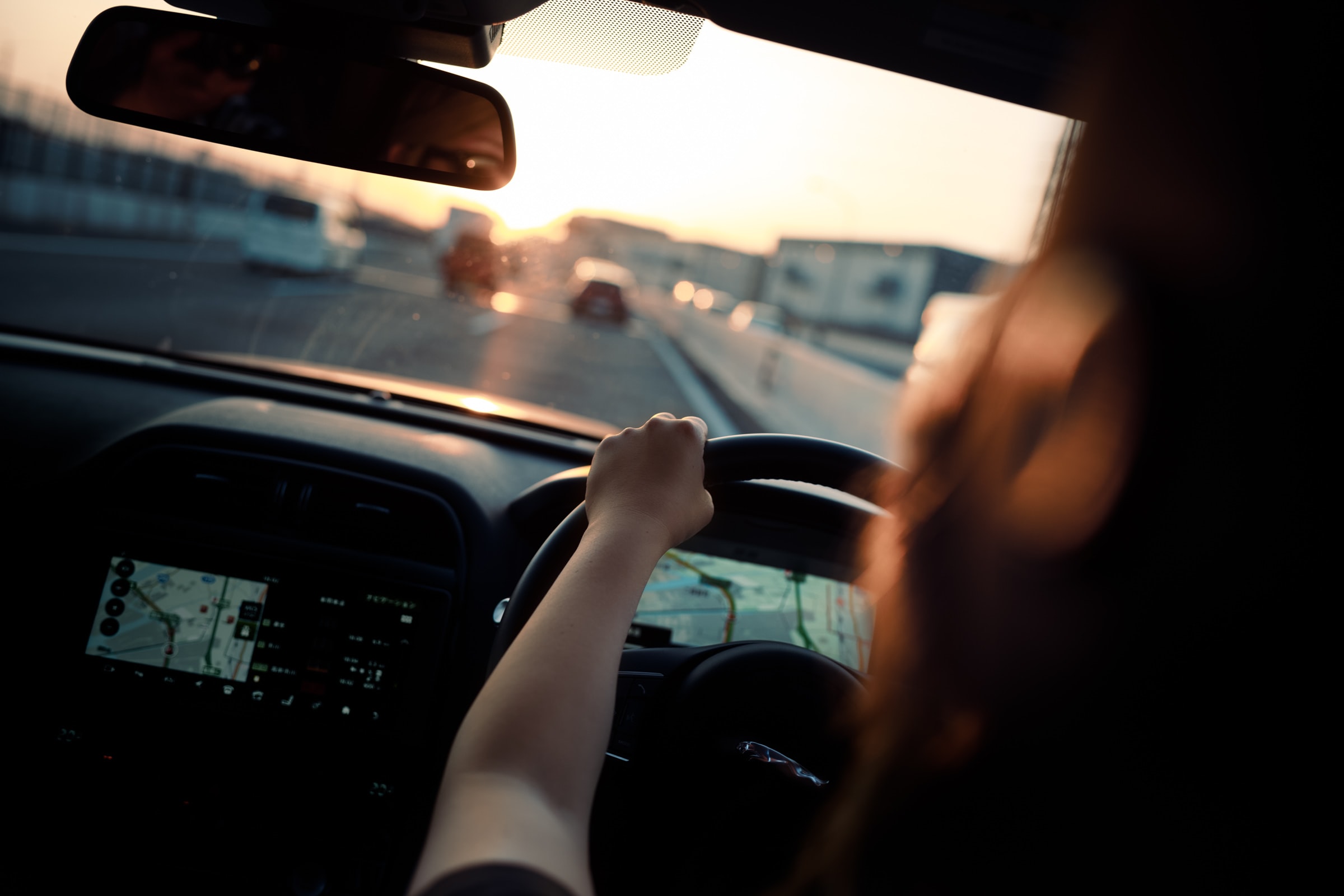
Short answer: Japan drives on the left, with the steering wheel on the right, like the UK, Ireland, Australia and New Zealand. If you come from a right-hand-traffic country, this is the first thing to get used to, and most drivers do within an hour.
"Is it hard to get used to driving on the other side?" is the second most common question we see. The honest answer is that driving in a straight line is easy; the car in front shows you where to be. The moments that catch people out are the ones without a reference car: pulling out of a hotel car park in the morning, turning right at an empty junction, and roundabouts, which are rare in Japan but do exist. The reflex to build is simple: the driver sits in the middle of the road, the passenger is next to the kerb.
Two practical details. In most Japanese cars the indicator stalk is on the right of the steering wheel and the wipers on the left, the opposite of European cars; expect to wash your windscreen at the first three junctions. And when turning, remember that the near-side mirror is now on your left: check it before every lane change, because cyclists and scooters filter on that side.
3. Automatic cars and kei cars
Short answer: almost the entire Japanese rental fleet is automatic. Manual cars exist but are rare, more expensive and often restricted to sports models. Ask for an automatic, which also frees your attention for the left-hand driving.
The gear selector is universal: P for parking, R for reverse, N for neutral, D for drive. Many cars add B or L for engine braking on long descents, useful in the mountains. Hybrids such as the Toyota Aqua or Prius start silently; if the dashboard shows READY, the car is on.
You will also be offered kei cars, recognisable by their yellow number plates. These 660 cc micro-cars are cheap to rent, cheap to fuel, pay lower tolls and fit into any car park. They are perfect for two people with light luggage and for narrow village streets. For four adults, suitcases or long expressway days, a compact car or a minivan is more comfortable.
4. Speed limits and enforcement
Short answer: Japanese speed limits are low by European and American standards, and they are enforced. Driving in Japan is slow, and that is part of its charm.
| Road type | Usual limit | What to know |
|---|---|---|
| Residential streets without a centre line | 30 km/h | Default limit since 1 September 2026, unless a sign says otherwise. School zones are often 20 km/h |
| Urban roads | 40 to 50 km/h | Fixed cameras are announced by a sign; mobile checks are not |
| Rural roads and national routes | 50 to 60 km/h | The roads often look faster than they are. 60 km/h is the national default outside built-up areas |
| Expressways | 80 to 100 km/h | 120 km/h on a few sections of the Tomei, Shin-Tomei and Tohoku expressways. Minimum 50 km/h |
Local traffic generally flows 10 km/h above the posted limit, and the police tolerate small excesses; the fines start to bite from about 15 km/h over, and from 30 km/h over on ordinary roads (40 on expressways) the offence becomes criminal, with a court appearance and a fine of up to 100,000 yen. Rental companies receive the ticket weeks after you have left and bill you with an administrative fee on top.
5. Stop signs, railway crossings and traffic lights
Short answer: three rules that do not exist in the same form at home, and that account for most fines given to foreign drivers.
The stop sign is a red downward triangle
The Japanese stop sign is an inverted red triangle bearing the characters 止まれ (tomare), often with "STOP" in English underneath since 2017, and accompanied by a white line and the same characters painted on the road. Many visitors read it as a yield sign; it is not. The law requires a complete stop, wheels stationary, before the line, even on an empty road at night. Police often wait near stop signs in residential areas, and the fine is 7,000 yen plus two points.
Stop at every railway crossing
Before every level crossing, drivers must stop completely, look both ways and listen, then cross, even when the barriers are up and the lights are off. Japan has thousands of crossings, many of them on small suburban lines, and a car that rolls through one is an easy catch for the police. Never enter a crossing unless there is room to exit on the other side.
Traffic lights and arrows
Japanese traffic lights are horizontal and the "green" is often distinctly blue-green, called ao in Japanese. A red light with a green arrow allows you to go in the direction of the arrow only. Unlike in the United States, there is no turning left on red. Flashing yellow means proceed with caution; flashing red means stop, then proceed if clear. At night, some lights in rural areas switch to flashing mode.
Pedestrians have absolute priority
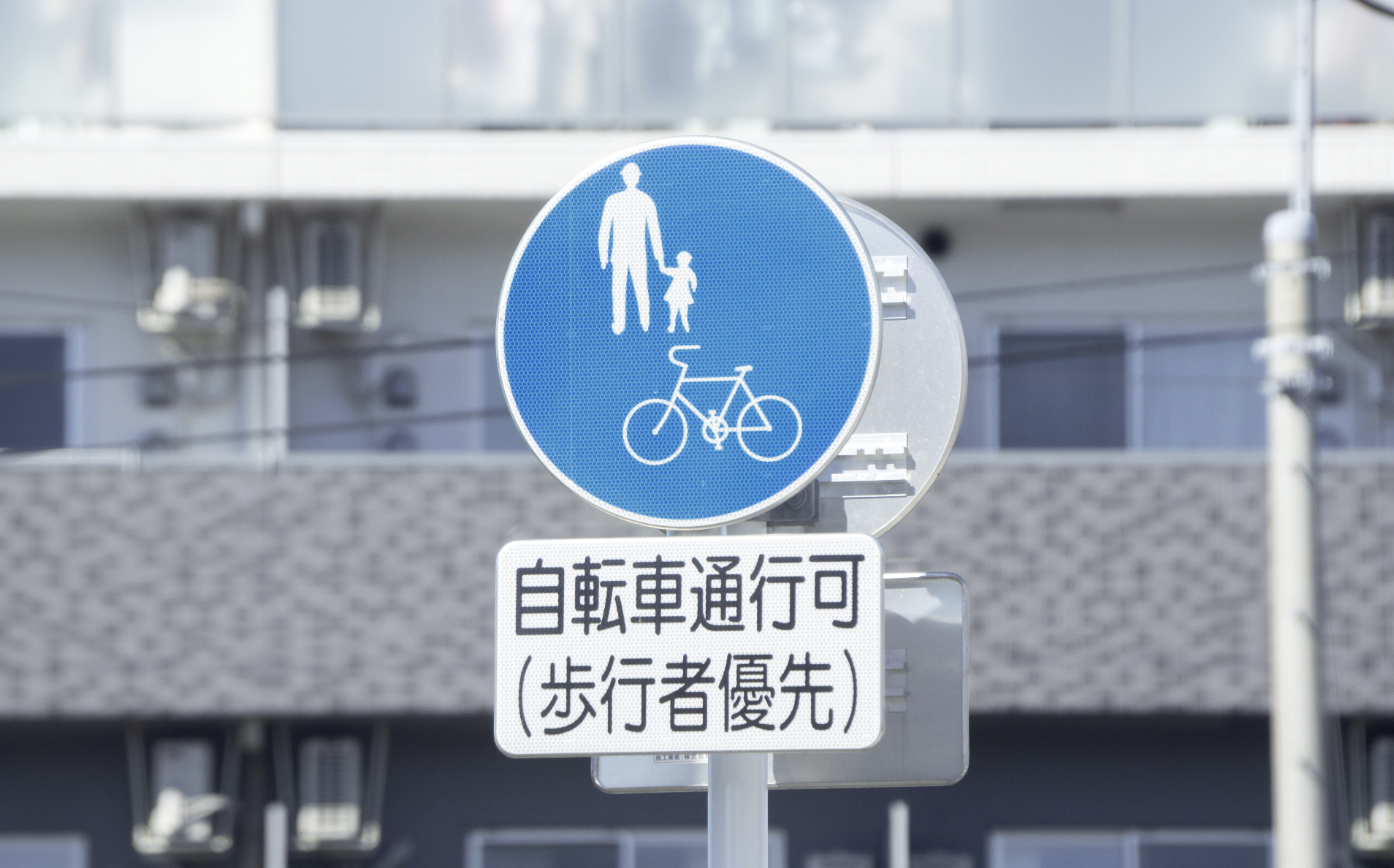
At a zebra crossing without lights, a driver must stop as soon as a pedestrian shows the intention to cross. Police campaigns since 2021 have made this rule heavily enforced. The courteous bow you receive from a pedestrian after stopping is one of the pleasures of driving here.
6. Zero tolerance on alcohol
Short answer: do not drink anything on the days you drive. Not one beer, not a glass of sake with dinner.
Japan's legal limit is 0.15 mg of alcohol per litre of breath, roughly a third of the limit in England or the United States, and a single drink can exceed it. The penalties are among the harshest in the world: a fine of up to 500,000 yen and up to three years in prison for driving under the influence, up to 1,000,000 yen and five years for driving while drunk. The law also punishes passengers who knew the driver had been drinking, the person who served or sold the alcohol, and anyone who lent the car. After a dinner with drinks, use the daiko service, where a two-person crew drives you and your car home, or leave the car and take a taxi.
7. Phones, seat belts and child seats
- Phones. Holding a phone while driving, even at a red light, has been punished since December 2019 by a fine of 18,000 yen and three points; if it causes a dangerous situation, it becomes a criminal offence with up to a year in prison. Use a holder for navigation, and set the route before you move off.
- Seat belts. Mandatory for every seat, front and rear, on every road. The driver is responsible for passengers' belts.
- Child seats. Compulsory for children under six. Reserve the seat with the car; rental companies supply infant, toddler and junior models at a small charge, and they are rarely available at the counter without a booking.
- Headlights. Many Japanese drivers use headlights in daylight on rural roads; it is not compulsory, but switch on lights in tunnels, which are frequent in the mountains.
8. Expressways, tolls and the ETC card
Short answer: Japanese expressways are superb and expensive. Budget around 25 to 30 yen per kilometre for a standard car, take an ETC card, and look at the tourist passes if you are covering long distances.
"How expensive are the tolls, really?" Tokyo to Osaka, about 500 km, costs roughly 10,000 yen one way. Tokyo to Nagano around 4,500 yen. Tokyo to Hakone around 2,500 yen. Kei cars pay about 20% less. Tolls are collected at the entrance and exit of each section; without an ETC card you take a ticket at the entrance and pay cash or card at the exit in a manned lane.
The ETC card
ETC, Electronic Toll Collection, is a small card inserted in a reader in the car that lets you drive through the purple ETC lanes without stopping. Rental companies lend one for around 330 yen per rental and add the tolls to your final bill. Ask for it when you book; it is the only way to use the tourist passes below.
Tourist expressway passes
NEXCO, the expressway operators, sell flat-rate passes to foreign visitors: the Japan Expressway Pass (7 or 14 days, nationwide except Tokyo and Osaka metropolitan areas), the Hokkaido Expressway Pass, the Tohoku, Central Nippon, Kansai and Kyushu passes. For a road trip of several hundred kilometres they pay for themselves in two or three days. Reserve them with the car; they are loaded on the ETC card at the counter.
Service areas
Service areas (SA) and the smaller parking areas (PA) appear every 15 to 25 km. They are clean, open 24 hours, and the better ones have regional food, bakeries, souvenir shops and sometimes hot springs. Stopping at them is part of the road trip. On expressways, keep left except to overtake; the right-hand lane is for passing only and the police do enforce it.
9. Parking
Short answer: on-street parking is forbidden almost everywhere. Use paid car parks, which are everywhere.
Japanese cities have very little on-street parking, and stopping where it is not explicitly allowed earns a 15,000 yen fine and a sticker on the windscreen within minutes. Instead, every neighbourhood has coin parking lots: you drive over a flap that rises under the car, and pay at the machine before leaving. Rates run from 100 yen per hour in small towns to 600 yen per 30 minutes in central Tokyo. Hotels charge 1,000 to 2,000 yen per night for parking in cities, often nothing in the countryside. Temples, shrines and tourist sites usually have their own car park. Convenience store car parks are for customers only; buy a coffee if you stop.
Most Japanese drivers reverse into spaces. It is not compulsory, but it is expected, and it makes leaving a narrow lot much easier.
10. Fuel stations
Fuel stations are of two kinds: full-service, where an attendant fills the car, cleans the windscreen and takes your payment, and self-service, marked セルフ. Petrol is called regular (レギュラー, red nozzle), premium is high-octane (ハイオク, yellow), diesel is keiyu (軽油, green). Almost all rental cars take regular. The word for "fill it up" is mantan. Rental companies require the car to be returned with a full tank and ask for the receipt from a station near the return point; without it they refuel at their own rate, which is much higher. Note that stations in the countryside close early, often by 8 pm, and are far apart in Hokkaido and the mountains: fill up when you are at half a tank.
11. Unwritten rules and road etiquette
- The thank-you flash. After someone lets you merge or overtake, flash your hazard lights twice. Japanese drivers do it constantly and will expect it from you.
- The horn is almost never used. A short beep is a greeting or an apology, never a reproach. Leaning on the horn at a slow driver is considered extremely rude.
- Let others in. On congested roads drivers alternate at merges without being asked. Do the same.
- Mountain roads. On narrow single-track roads, the car going uphill has priority. Pull into the passing bays, and wave when someone pulls in for you.
- Keep left at junctions. When waiting to turn right, do not creep into the junction; wait at the line until there is a clear gap.
- No eating at the wheel is not a law, but drinking and smoking while driving are frowned upon.
12. Winter driving
From late November to March, Hokkaido, the Tohoku region, the Sea of Japan coast and every mountain road are snowy or icy. In these regions rental cars come with studless winter tyres as standard; elsewhere they are an option to request when booking, and worth it if your route climbs above 500 metres. Snow chains are compulsory on certain expressway sections during heavy snowfall, and some scenic high-altitude roads such as the Tateyama Kurobe route, the Shiga-Kusatsu road and most of the Nikko passes close completely for the winter. The Pacific coast from Tokyo to Kyushu is usually clear. On icy roads, Japanese drivers brake early and gently and leave very long gaps; follow their lead.
13. Police checks and fines
Traffic police are present and polite. Checks are frequent near tourist areas and on rural roads with low limits; if your documents are in order they take two minutes. The officer asks for your licence, your IDP or translation, and sometimes your passport, compares the names and numbers, notes the plate and sends you on your way. If your documents are not in order, you are driving without a valid licence, which is a criminal offence: fine, possible detention of the vehicle until a legally licensed driver collects it, and the rental company's insurance is void.
Minor offences are dealt with by a blue ticket paid within days at a post office or bank. Points accumulate on a virtual record for foreign drivers and can lead to a driving ban in Japan. If a ticket reaches the rental company after you have left, they will charge your card with a handling fee.
14. Accidents and emergencies
- Police: 110. Call after any accident, however small. Japanese insurers will not process a claim without a police report, and leaving the scene without reporting is a criminal offence.
- Fire and ambulance: 119.
- JAF roadside assistance: #8139 from a mobile, or 0570-00-8139, with English service. Your rental company also has its own emergency number, printed on the contract.
- Japan Visitor Hotline: 050-3816-2787, run by the Japan National Tourism Organization, 24 hours, in English, for help in any emergency.
After an accident: move the car to safety if it can be moved, set out the warning triangle that every rental car carries, call 110, then the rental company, exchange details with the other driver, and take photos. Do not negotiate privately, and never sign anything you cannot read. If you took the rental company's optional insurance covering the excess and the non-operation charge, this is where it pays for itself.
Checklist before you set off
- I know which document my licence requires: IDP (Geneva format) or official JAF translation.
- I have it on paper, with my original licence and passport, and every driver on the contract has their own.
- I have booked an automatic car, a child seat if needed, winter tyres if my route goes north or into the mountains.
- I have asked for an ETC card and compared the expressway passes.
- I have read our guide to road signs in Japan and know the stop sign, the railway-crossing rule and the 30 km/h default.
- I have saved 110, 119 and #8139 in my phone, plus the rental company's number.
- I will not drink a drop of alcohol on the days I drive.
- I will return the car with a full tank and the fuel receipt.
Planning your route? Browse the cafés, restaurants, inns and activities we have selected across Japan in our Japan recommendations.
FAQ: driving rules in Japan
Is an International Driving Permit enough to drive in Japan?
It depends on the country that issued your licence. Japan only recognises the 1949 Geneva Convention permit. Licences from France, Germany, Belgium, Switzerland, Monaco, Slovenia and Taiwan are not covered: drivers from these countries must carry their original licence, their passport and an official Japanese translation issued by the JAF. Drivers from the UK, Ireland, the USA, Canada, Australia, New Zealand, the Netherlands, Spain, Italy or Austria use their IDP.
Which side of the road do they drive on in Japan?
The left, with the steering wheel on the right, like in the UK, Ireland, Australia and New Zealand. Most visitors adjust within an hour or two; the moments that need attention are pulling out of a car park, turning at junctions and the first roundabout.
What are the speed limits in Japan?
Typically 30 to 40 km/h on residential streets, 50 to 60 km/h on urban and rural roads, 80 to 100 km/h on expressways, with 120 km/h on a few sections. Since 1 September 2026, the default limit on narrow residential streets without a centre line is 30 km/h unless a sign says otherwise.
Can I have one drink and drive in Japan?
No. Japan applies zero tolerance. A single beer can put you over the 0.15 mg/l breath limit, and penalties are among the harshest in the world: fines up to 500,000 yen, licence suspension and possible prison time. Passengers who knew the driver had been drinking, and the person who served the alcohol, can also be prosecuted.
Do I have to stop at every railway crossing?
Yes. Japanese law requires a complete stop before every level crossing, even when the barriers are up and no train is in sight. Drivers are expected to stop, look and listen before proceeding. Not stopping is a fineable offence.
How much do Japanese expressway tolls cost?
Roughly 25 to 30 yen per kilometre for a standard car, so around 10,000 yen from Tokyo to Osaka. An ETC card from your rental company lets you pass toll gates without stopping, and regional tourist passes such as the Japan Expressway Pass or Hokkaido Expressway Pass can cut the bill significantly on a multi-day road trip.
What should I do after an accident in Japan?
Stop, move to safety, call the police on 110 even for a minor scrape, then call your rental company. Japanese insurers will not process a claim without a police report. Do not negotiate privately with the other driver and do not leave the scene.
What documents does the rental company check at the counter?
Three things: your original driving licence, your passport, and either your International Driving Permit (Geneva format) or, for French, German, Belgian, Swiss, Monegasque, Slovenian and Taiwanese licences, your official JAF translation on paper. A photo or PDF of the translation is refused.
French, German, Belgian or Swiss licence?
One photo of your licence is enough. You receive the official JAF translation before you fly, checked by our team in Osaka, and pick up your car without discussion.
Order your licence translationSources and updates
This article is revised whenever Japanese traffic rules or JAF procedures change, and at least every quarter. Last update: November 2026. Information is drawn from the Road Traffic Act as amended in 2026, the Japan Automobile Federation's "Rules of the Road" and translation guidelines, the National Police Agency, the terms and conditions of the main Japanese rental companies, and the questions our customers have asked us since 2017. The quoted phrases are typical of questions found on public English-language travel forums.
DrivinJapan, based in Osaka. 15,000 customers helped since 2017 to obtain their official JAF driving licence translation for Japan.