The detailed guide to exploring Izu by car from Tokyo, with stops, scenery and practical tips.
Izu Peninsula road trip: onsen, coves and scenic roads from Tokyo
Introduction
When people think of a road trip in Japan, they often picture Mount Fuji, Kyoto or the Japanese Alps. Yet the Izu Peninsula is one of the best ideas for a getaway by car from Tokyo. Closer, and easier to fit into a first trip, it combines beaches, onsen, small coastal towns, cliffs and some very beautiful seaside roads.
This part of Shizuoka is appealing precisely because the atmosphere changes so quickly. Within a few hours, you go from a well-known seaside resort to a quieter village, from a rugged coastline to a ryokan with a hot bath, and then onto a scenic road overlooking the ocean. For travellers who want to experience a more relaxed side of Japan without going far from Tokyo, Izu is an excellent choice.
💡 Key takeaway: Izu is particularly well suited to a short road trip of 2 to 4 days, offering a real sense of escape while remaining very accessible from Tokyo.
1. Why choose Izu from Tokyo?
The Izu Peninsula stands out for a rare combination: it is close to Tokyo, yet offers a genuine sense of getting away from it all. JNTO describes Izu as a region famous for its beaches, onsen and water sports, with well-known towns such as Atami, Ito and Shimoda, as well as areas like Minami-Izu and Nishi-Izu that are growing in popularity.
The official Izu tourist guide also points out that the region brings together 13 cities and towns with very different identities, with hot springs, a long coastline and a great variety of scenery. That makes it an ideal destination for a trip by car, as the diversity of the landscape is really part of the experience.
2. Getting there and travel times
Izu is easily accessible from Tokyo. According to JNTO, the shinkansen takes about 50 minutes between Tokyo and Atami, the gateway to the peninsula. By car, the logic is different: the point isn't to get there as fast as possible, but to take to the road and enjoy the stops and the changes of atmosphere.
Several travel guides point out that the drive from Tokyo is reasonable for a short road trip, with around 1 h 45 to 2 h to Atami depending on the route taken. Once on the peninsula, the east coast is easier to reach, while the west takes more time but also offers some of the most spectacular scenery.
| Area | Main appeal | Atmosphere | Best for |
|---|---|---|---|
| Atami / Ito | Easy access, onsen, first stop | Seaside resort and relaxation | A short first getaway |
| Shimoda / Minami-Izu | Beaches, coves, a more open feel | Sea and a wilder south | Travellers looking for the most beautiful bays |
| Nishi-Izu / Dogashima | Cliffs, rock formations, sunsets | Scenic coastline | Lovers of driving and landscapes |
3. Recommended 3-day itinerary
For many travellers, 3 days is the right balance for Izu. That leaves enough time to get onto the peninsula, enjoy a first onsen stop, head down south and then come back up via the west or return through the interior, depending on your pace.
- Day 1: Tokyo → Atami or Ito, then check in at an onsen.
- Day 2: drive to Shimoda, beaches and coves, night in southern Izu.
- Day 3: head back up via Dogashima or Nishi-Izu, then return to Tokyo.
This format is flexible. You can also extend it to 4 days if you want to make more of the west coast, which is often the most spectacular but also the slowest to drive.
4. East coast: Atami, Ito and your first onsen
The east coast is the most natural way into Izu. Atami is often the first major gateway, and Ito then follows on logically for a first night. This part of the trip suits those who want an easy arrival, a first hot bath and a gentle start.
The official Izu guide stresses the historical importance of hot springs in the region. It mentions some 2,300 onsen scattered across Izu and notes that Shuzenji Onsen is considered the oldest hot spring in Izu. Even if you're not planning a big hot-spring circuit, this onsen culture is an integral part of the road trip.
Why this stop is worthwhile
- It lets you start the road trip stress-free.
- It quickly immerses you in Izu's onsen atmosphere.
- It makes a good base before heading down to the wilder areas.
5. Southern Izu: Shimoda, Minami-Izu and the coves
As you continue south, the atmosphere changes noticeably. Shimoda is known for its beaches and its more open coastal setting, while Minami-Izu attracts those who want to get away from the more classic resorts to enjoy coves, small inlets and a quieter coastline.
It's often in this part of the trip that the car becomes most useful. The best stops aren't always in the towns, but along the small roads leading to beaches, cliffs or more secluded accommodation.
💡 Tip: don't try to cram too many spots into one day. In Izu, the road is part of the pleasure, and the best stops are often the ones where you leave time for an unplanned break by the sea.
6. Western Izu: Nishi-Izu and Dogashima, the most scenic part
The west coast is often the most spectacular part of Izu. Japan Guide highlights Dogashima in particular for its cliffs and remarkable rock formations. This is the section to prioritise if you love coastal roads, viewpoints and more dramatic scenery.
The official B-Izu guide also notes that Izu's coastline stretches for more than 300 kilometres and that the local geology has shaped a region renowned for the beauty of its panoramas. This explains why western Izu feels more like a scenic road trip than a classic seaside getaway.
Why Nishi-Izu leaves such an impression
- The roads are slower, but visually more striking.
- The cliffs and coves give the landscape a real identity.
- The sunsets here are particularly sought after.
7. Tips for driving around Izu
Izu lends itself well to driving, but you need to accept a different pace from that of Japan's big expressways. Some sections are fast and straightforward, but other coastal roads take more time, especially if you stop often. The aim isn't to cover lots of kilometres, but to keep things genuinely flexible.
- Leave Tokyo early to avoid arriving late on the peninsula.
- Don't overload your days, especially if you want to enjoy the onsen.
- Book accommodation with parking, especially in coastal areas.
- Leave some leeway for the weather, as it makes a big difference to how the coast looks.
This road trip works particularly well in spring, in early summer outside peak periods, and in autumn, when traffic is still pleasant and the weather still lets you make the most of the coast.
8. Documents to sort out before driving in Izu
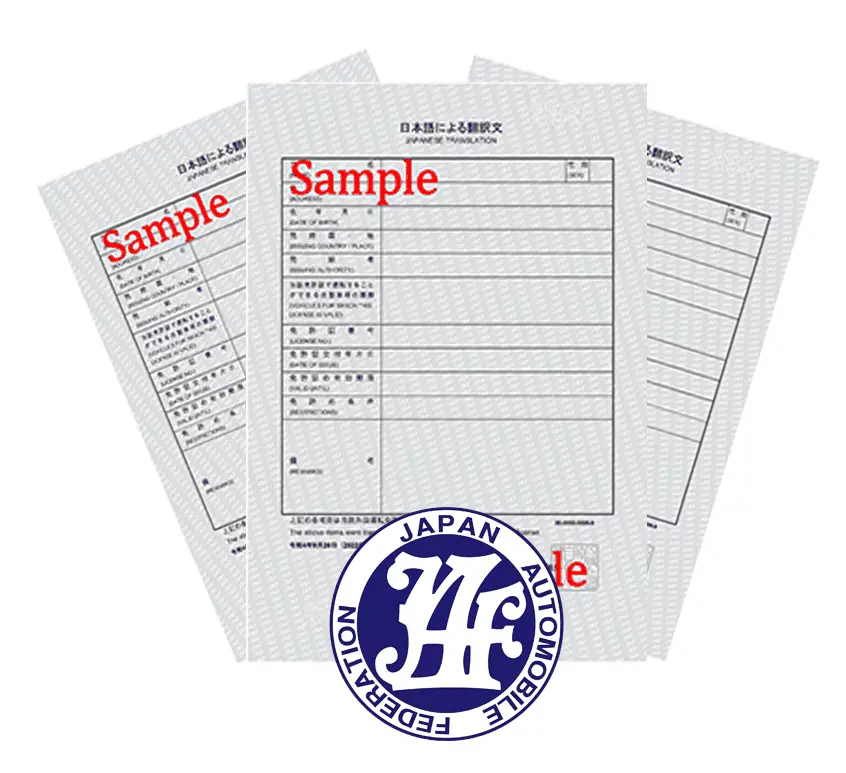
As with any road trip in Japan, you need to check the legal requirements for driving before you leave. The official JAF website explains that translation applications are now accepted online only and specifies that a translation application can only be made in Japan.
The JAF information document also states that applications are made via the dedicated website, that images of the valid licence must be provided and that issuing takes around one to two weeks, longer in some cases depending on the country. The JAF page also mentions a new fee of 6,600 yen including tax.
Get your JAF translation sorted before your road trip
If you want to set off on Izu's roads with peace of mind, it's best to prepare your official translation before picking up the vehicle. It's a simple step to plan ahead for, but an essential one to avoid nasty surprises at the start of your trip.
Prepare my JAF translationFAQ: road trip on the Izu Peninsula
Here are the most frequently asked questions before planning a getaway by car to Izu from Tokyo.
Is the Izu Peninsula worth the trip for a road trip from Tokyo?
Yes. Izu is one of the most rewarding getaways from Tokyo for combining the sea, onsen, small roads and coastal scenery.
How many days do you need to visit Izu by car?
Two to four days is a very good basis, depending on whether you mainly want to see the east coast or do a proper, more scenic tour that includes the west.
Which part of Izu is the most spectacular?
The west coast around Dogashima and Nishi-Izu is often considered the most impressive for its scenery and cliffs.
Can you visit Izu without speaking Japanese?
Yes, but preparing your itinerary, bookings and documents before you leave will make the trip much smoother.
Should you get your JAF translation in advance to drive in Izu?
Yes, many travellers need it to drive legally in Japan, and it's best to arrange it before renting the vehicle.