Travelling to Japan with children: car or train? Car seats, safety, budget, family itineraries. A 2026 guide for parents planning a road trip.
FAMILY & CHILDREN
Travelling in Japan with children: is renting a car a good idea? A 2026 guide for families
Introduction: your Japan road trip… with car seats in the back
You can already picture the scene: your children shouting "look, Mount Fuji!" through the window, a matcha ice cream on a beach on the Izu Peninsula, or a red torii glimpsed round a bend somewhere in the Japanese countryside. Japan as a family is not just Tokyo and its neon lights: it is also quiet roads, onsen in the middle of nature, and small inns you arrive at by car, tired but happy.
And then there is the practical reality that brings you back down to earth: train or car? JR Pass or car rental? You want freedom, but you also want everything to go smoothly for your children. You don't necessarily want to spend your holiday stressing about driving on the left or about train times with a pushchair and suitcases.
In this article, we are not going to tell you that the car is "better" than the train for a family trip to Japan. That would be too simplistic. The idea is rather to give you all the information you need so that you can decide whether the car suits your family, your children and the way you travel.
By the end of this 2026 guide, you will know clearly: when the car is an excellent idea, when the train remains simpler, how to handle car seats and safety, which itineraries are best suited, and how DrivinJapan can help you prepare all of this with peace of mind (licence translation, family advice, French-speaking guides).
💡 Keep in mind: there is no single right answer for everyone, but there is a right answer for your family, your budget and your children's ages.
Train or car in Japan with children: the real debate
Before we talk about car seats and itineraries, let's start with the big question: should you favour the train or the car for a family trip to Japan by car? Both options have real advantages, but also limitations when you are travelling with children aged 3 to 15.
The advantages of the train with children
Trains in Japan have an excellent reputation, and for good reason. The shinkansen is fast, clean and punctual, and it is often an experience in itself for children. The seats are comfortable, the toilets clean, and there is room to stand up, walk about a little, look out of the window or play quietly.
With a JR Pass or reserved tickets, you don't have to worry about driving, tiredness or unfamiliar roads. You can focus on your children, play with them and handle the little tricky moments (hunger, tiredness, squabbles) without having your hands on the wheel. No parking to look for, no tolls to deal with, no GPS to keep an eye on.
The limitations of the train for families
On the other hand, what people often forget is everything that surrounds the train journey. Japan's big stations are real labyrinths. Add suitcases, a pushchair, cuddly toys and sometimes a child in your arms, and the transfers can become exhausting. A "simple" journey on the map can mean a lot of walking and changes of level.
With babies and toddlers, constantly carrying or pushing, and getting on and off sometimes crowded trains, can quickly wear parents out… and fray their nerves. Itineraries are also less flexible: it is hard to improvise a stop in a small village or to wander away from the station for a spontaneous walk.
Finally, as soon as you leave the main routes, train and bus frequencies drop sharply. In some rural areas, there are only a few buses a day. For a family of 4 or 5, the combined cost of train tickets (especially since the JR Pass price increase) can exceed the cost of a rental car, particularly over 10 to 14 days.
The real advantages of the car for families
With children, the car brings something precious: control over the pace. You leave when you want, you take a break as soon as someone starts to flag, and you can stop for a viewpoint, a park, a konbini or an onsen. Naps happen in the car seat, cuddly toys stay within reach, and the luggage is in the boot rather than on your back.
To discover regions such as the Fuji Five Lakes, the Izu Peninsula, Hokkaido, or parts of Kyushu or Shikoku, a car is a real asset. Public transport exists, but it is sometimes infrequent. By car, you can reach a ryokan in the middle of nature, a local amusement park or a little-known beach without juggling three different buses.
Budget-wise, from 4 people upwards, the car often becomes competitive compared with a combination of JR Pass + local trains + taxis. You pay for the rental, reasonably priced fuel and tolls, but you save on individual tickets and gain flexibility in your itinerary.
The honest challenges of the car for families
Driving in Japan with children is not exactly a walk in the park either. You have to adapt to driving on the left, to roads that are sometimes narrow in rural areas, to paid (and sometimes expensive) parking in the cities, and to expressway tolls. You also need to factor in jet lag: an exhausted parent + driving on the left + a GPS in a foreign language is not the best combination.
The first day is often the trickiest: arriving, tiredness, getting to grips with the vehicle, discovering the road signs… Hence the value of not planning a long drive straight off the plane. We will come back to this later.
| Option | Strengths for families | Points to watch |
|---|---|---|
| Train (JR Pass & co.) | Comfort, safety, no driving fatigue, the shinkansen experience. | Tiring station/hotel transfers, inflexible in rural areas, high budget for 4-5 people. |
| Rental car | Pace suited to children, access to natural areas, luggage safely stowed in the boot. | Driving on the left, paid parking, managing tiredness and jet lag. |
💡 Tip: if this is your first trip, nothing forces you to choose 100% train or 100% car. Many families do the first part by train, then spend a few days driving in a region of their choice.
The car seat rule in Japan: what you absolutely need to know
Now let's talk about what worries parents most: safety in the car, and in particular car seats in Japan. The good news: the law is fairly clear, and rental companies are used to welcoming families.
What does Japanese law say?
Under Japanese traffic law, every child under 6 must be properly secured in a suitable car seat when travelling in a private car. This applies to both the front and the back of the vehicle. Beyond that age, it is strongly recommended to continue using a booster seat depending on the child's height and weight.
In practice, the penalty for non-compliance remains limited (loss of a point on the Japanese licence, low severity). But that is not the point: it is above all about safety, especially on expressways or fast roads. As in Europe, a properly fitted seat makes all the difference in a collision.
Do rental companies provide car seats?
Almost all the major rental companies (Toyota Rent a Car, Times, Nippon Rent-a-Car, Nissan Rent-a-Car, etc.) offer car seats as an option. It is a very common service, and it is perfectly acceptable to book several seats for the same car.
Prices are generally around 500 to 1,100 yen per day per seat, depending on the rental company and the category. You will usually find three types:
- Baby seat (0–1 year, rear-facing).
- Child seat (1–4 years, harness).
- Booster seat (approx. 4–10 years, vehicle seat belt).
You absolutely must book them in advance, especially in high season (spring, summer, Golden Week). Some rental companies may refuse to hand over the car if you arrive with a child under 6 without a car seat booked or brought with you.
Should you bring your own car seat?
That is the big question. Bringing your own seat has two advantages: your child knows it, it is approved to European standards (ECE R44/04 or R129 i-Size) and you know how to adjust it. On the other hand, it is bulky, especially if you have several children.
Generally speaking, we can say:
- For a stay of 7 days or less: renting locally is often simpler.
- For 14 days or more: bringing at least one seat (or booster) can be worthwhile, especially if you already have a light, compact one.
Most airlines accept a car seat in the hold free of charge for each child (check with your airline), which makes the decision a little easier. For a family that travels often, investing in a lightweight travel seat can be a good idea.
Compatibility between seats and cars
Most rental cars in Japan are fitted with ISOFIX, as in Europe. Recent European car seats attach to it without any problem. For older models, fitting with the seat belt is still possible.
When booking, don't hesitate to mention that you are travelling with several car seats (rented or brought with you) and to ask for a suitable car model (compact minivan or family saloon). This is something DrivinJapan can plan ahead with you when you are thinking about your itinerary.
💡 Tip for parents: if your child struggles to stay strapped in for long, plan shorter journeys, frequent breaks and a few "surprises" that only come out in the car (books, games, audio).
The ideal pace for a road trip in Japan with children
A Japan road trip with children is not planned like a trip between adults. The key is not to tick off as many spots as possible, but to adopt a pace that respects the whole family's energy.
A good simple rule: 200 km maximum per day, and not every day. Beyond that, even teenagers have had enough. For younger children, 1h30 to 2 hours of continuous driving is often a comfortable maximum before a break.
Try to structure your days like this:
- 50% of the time for sightseeing, activities and discoveries.
- 50% for journeys, breaks and quiet time (park, onsen, swimming pool).
At the end of the day, choose accommodation with something extra for children: an onsen, a small garden, a breakfast buffet, a slightly larger room. It is not a luxury, it is an investment in the group's morale.
And above all, one important point: don't plan any complicated sightseeing on the day you arrive. Between jet lag, the flight and discovering the country, your energy will be limited. Save driving on the left for later, when everyone has had a better night's sleep.
💡 Golden rule: if a day in your plan already seems packed when you read it calmly at home, it will probably be too much once you are there with your children.
The best itineraries for families travelling by car
Here are a few concrete itinerary ideas where a car adds real value to a family trip to Japan by car. For each one, we give the duration, the driving level and the highlights for children.
Itinerary 1 — The Fuji Five Lakes and Mount Fuji (3–4 days)
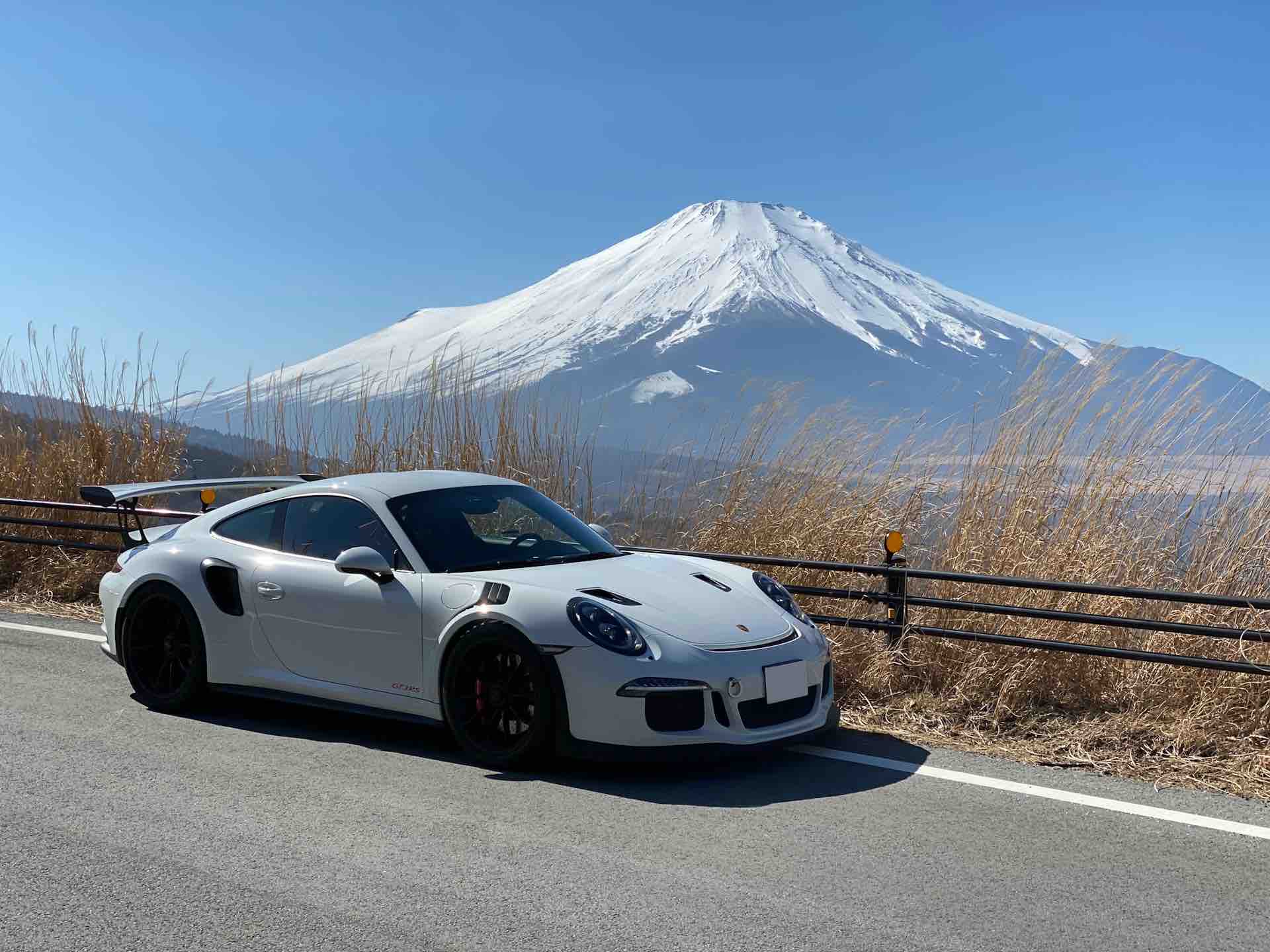
Ideal for a first experience of driving in Japan. You start from Tokyo, pick up your car after 2–3 days in the city, then head to the Five Lakes area (Kawaguchiko, Saiko, Yamanakako…). The roads are easy and well signposted, with plenty of rest areas.
For children: pedal boats on the lakes, parks with views of Fuji, amusement parks (such as Fuji-Q Highland for older children) and fun museums. You can plan 2 to 3 nights in the area, with a family-friendly ryokan and, if possible, a room with a mountain view.
Itinerary 2 — The Izu Peninsula (4–5 days)
South of Tokyo, Izu offers beaches, hot springs, superb coastal roads and small villages. It is a very pleasant region in spring and autumn. Distances are reasonable, making it a good playground for a first time driving with children.
Family activities: swimming (depending on the season), aquariums, little tourist trains, and private onsen baths for those who are not comfortable with public baths. Be aware that some roads are quite winding: ideally for children aged 5–6 and over.
Itinerary 3 — Hokkaido in summer (10–14 days)
For adventurous families, Hokkaido in summer is a delight: wide open spaces, national parks, animals, farms and incredible ice cream. The roads are generally wider and the traffic flows more freely than elsewhere in Japan. On the other hand, distances are greater.
This itinerary is particularly suitable for children aged 8 and over, who can manage a series of slightly longer days in the car. You will find plenty of rest areas, often well equipped for families.
Itinerary 4 — Southern Kyushu (7 days)
Kyushu, especially its southern part, combines volcanoes, onsen, tropical landscapes and beaches. The region is less touristy than Kansai, which can be pleasant for families. The roads are sometimes winding, but the views are superb.
It is a good choice for a second trip, or for families already comfortable with driving and driving on the left. For some stretches, a car is almost essential, as public transport is less frequent.
💡 Note: in Hokkaido and parts of Kyushu, a car is not just a convenience – it is practically a prerequisite for building an enjoyable family itinerary without spending your time checking bus timetables.
Safety measures to plan before you leave
To travel with peace of mind, a few safety and logistics points are worth sorting out before you leave. This is where DrivinJapan's support can make a difference, by planning ahead with you.
Documents and insurance
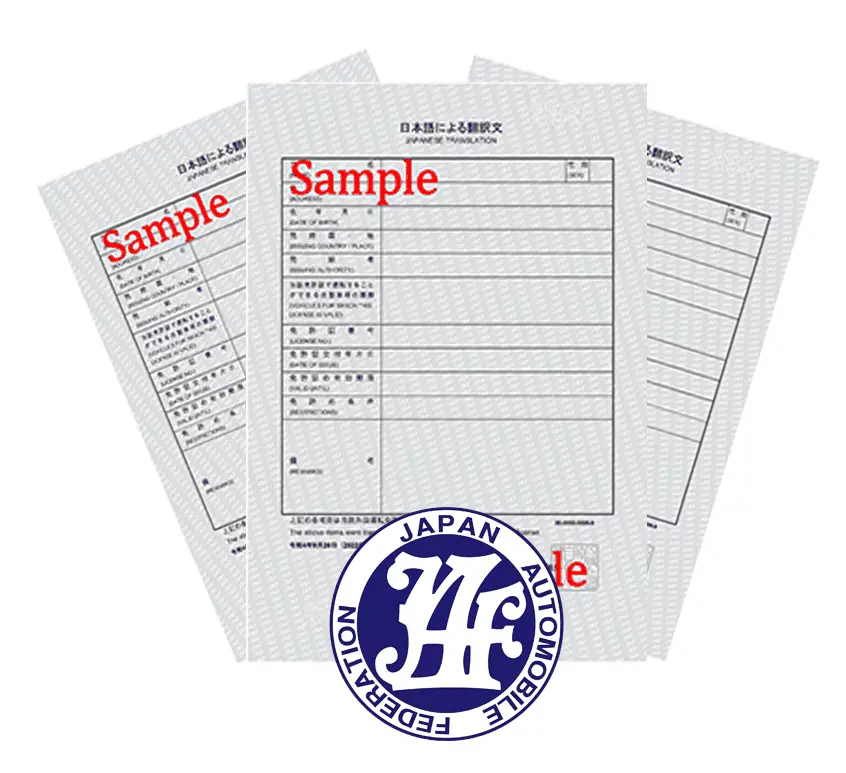
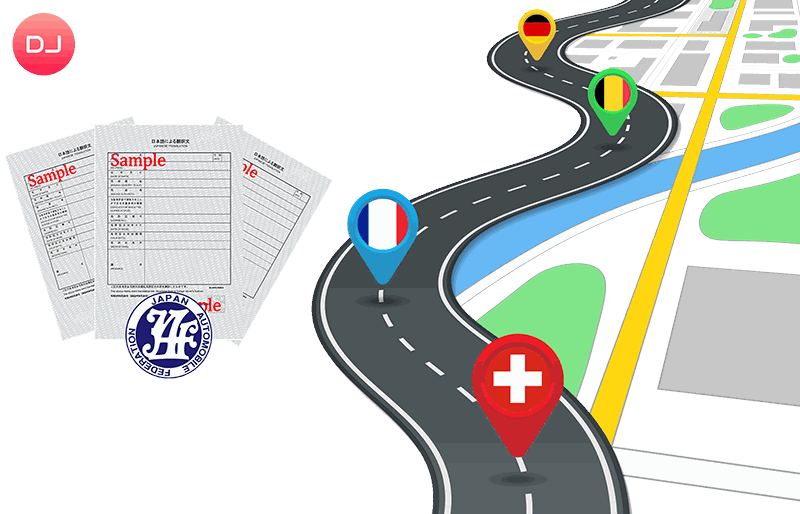
- Official JAF translation of the licence for each driver (to arrange 30–60 days before departure).
- Original national licence + passport with you at all times.
- Enhanced vehicle insurance (reduced excess, cover for common damage).
Practical tools
- Google Maps or another GPS in offline mode for rural areas.
- Translation apps (menus, simple signs).
- A little cash in yen for tolls, rural car parks and small shops.
Health & emergencies
- Emergency numbers in Japan: 119 (ambulance / fire brigade), 110 (police).
- International health record, any prescriptions, basic children's medicines (fever, tummy aches, etc.).
- A list of a few hospitals or clinics near your main stops.
💡 Good habit: note down in a shared document (or on a simple piece of paper) your essential numbers, hotel addresses, emergency numbers and DrivinJapan contacts. On the day you need them, you will be glad not to have to look for them.
Anticipating jet lag and the first few days
The time difference between Europe and Japan is around 7 to 8 hours. For an adult, that is already tough. For a child, it can mean very early wake-ups, slumps in the middle of the day, mood swings… and it is not the ideal time to discover driving on the left.
We generally recommend not driving for the first two days. The most comfortable scenario for a family: land, settle in for 2–3 nights in Tokyo, Osaka or Kyoto, adjust to local time, get your bearings, then pick up the car.
This is exactly where a local French-speaking guide can make a big difference. DrivinJapan works with a network of French-speaking guides in Tokyo and Kyoto who are used to families. They help you find your way around, manage the first few days and answer the children's questions, while giving you advice on the rest of your road trip.
Once everyone has settled in a little, picking up the car becomes an exciting step rather than a source of stress. You hit the road with a minimum of accumulated tiredness and more confidence in your bearings.
How much does a family road trip in Japan cost?
Let's talk budget, even in broad strokes. Here is a rough idea for a family of 4 (2 adults + 2 children) on a typical 10-day road trip.
| Item | Estimated range (10 days) |
|---|---|
| Family car rental | €500–800 |
| Fuel | €200–300 |
| Expressway tolls | €100–200 |
| Parking (car parks) | €50–100 |
| Car seats (2 children) | €70–100 |
| JAF licence translation (1–2 drivers) | €30–60 |
| Total transport for 4 people | ≈ €1,000–1,500 |
By way of comparison, a 14-day JR Pass for 2 adults + 2 children can already come to around €1,400 in total, just for the main transport, without buses, taxis or supplements. From 4 people upwards, the car therefore often becomes cost-competitive, while offering more flexibility.
Mistakes to avoid when travelling in Japan by car as a family
Even with good preparation, some mistakes come up again and again. Avoiding them will give you more peace of mind.
- Trying to see too much: adding more and more stops, changing hotels every night, throwing in extras "while we're at it"… at the expense of rest.
- Planning days of 4–5 hours' driving in a row with young children.
- Forgetting to check that the chosen hotel or ryokan actually has parking (free, if possible).
- Not arranging the licence translation in advance and ending up dealing with it urgently a few days before departure.
- Assuming that all onsen accept children, or that they will be comfortable in public baths without preparation.
- Underestimating the impact of jet lag by getting behind the wheel on the day of arrival for a long drive.
💡 Parent's tip: for each day of your itinerary, ask yourself "where is the slack?". A park, an onsen, a playground… something you can shorten or drop if tiredness sets in.
FAQ: your most frequently asked family questions
1. My child is 18 months old – can they travel by car in Japan?
Yes, provided they are properly secured in a suitable baby seat. Japanese law requires a car seat for all children under 6, and it is recommended to limit long stretches for toddlers.
2. Are Japanese people tolerant of babies and young children?
On the whole, yes, especially outside rush hour. Japanese people are often kind to families, even if the culture values calm. In the car, you will in any case have more freedom to deal with tears, naps and breaks without disturbing anyone.
3. What should I do if a child falls ill during the road trip?
In an emergency, call 119 for an ambulance or 110 for the police. In practice, it is useful to identify a few clinics or hospitals near your stops in advance, and to bring essential medicines (fever, digestive problems) with a prescription if necessary.
4. Can a family sleep in a campervan in Japan?
Yes, campervan travel is growing in Japan, with dedicated areas and certain authorised car parks. It is an interesting option for older children and for parents already comfortable driving on the left. However, you need to find out carefully where overnight parking is allowed.
5. Are there rest areas suitable for children?
Yes, many service areas (SA, PA) on Japanese expressways have clean toilets, shops and sometimes small playgrounds. They are very handy for organising regular breaks every 1h30–2 hours with children.
6. Is it risky to drive at night with children?
Japanese roads are generally safe, but tiredness and reduced visibility always increase the risks. With children, it is better to limit night driving, especially at the start of your stay. Aim to arrive at your accommodation in the late afternoon.
7. From what age can a child really enjoy a road trip in Japan?
From 4–5 years old, children already enjoy the landscapes, the animals, the baths and the activities. Between 8 and 12, they particularly appreciate the contrasts (city / countryside, amusement parks / temples, etc.). The key is to adapt the pace to their age rather than aiming for an "ideal" age.
8. Will my teenager get bored?
Generally, no. Teenagers love Japan: pop culture, landscapes, food, unusual accommodation. In the car, invite them to help choose the stops (where shall we stop? what shall we eat?) and to navigate. They quickly become co-pilots rather than mere passengers.
Conclusion: the car is an excellent choice if it is planned around your family
Renting a car in Japan with children can be a wonderful idea… provided you follow a few simple rules: arrange the official JAF translation of your licence in advance, plan a suitable pace, comply with the car seat law and choose itineraries that are genuinely designed for families.
For a first trip, a mix of train + a few days by car around Mount Fuji, Izu or Kyoto/Osaka works very well. For a second stay or with older children, regions such as Hokkaido or Kyushu really come into their own by car. In every case, the key is planning ahead.
If you feel that the car suits the way you travel, the first concrete step is simple: get your driving licence sorted. At DrivinJapan, we process your JAF translation from Japan, 30 to 60 days before departure, so that you arrive with your paperwork ready and approved. And if you would like to be accompanied for the first few days by a French-speaking guide in Tokyo or Kyoto, our network is there to help you get this family trip off to a good start.